Zum Hauptinhalt springen

Loom2Moon

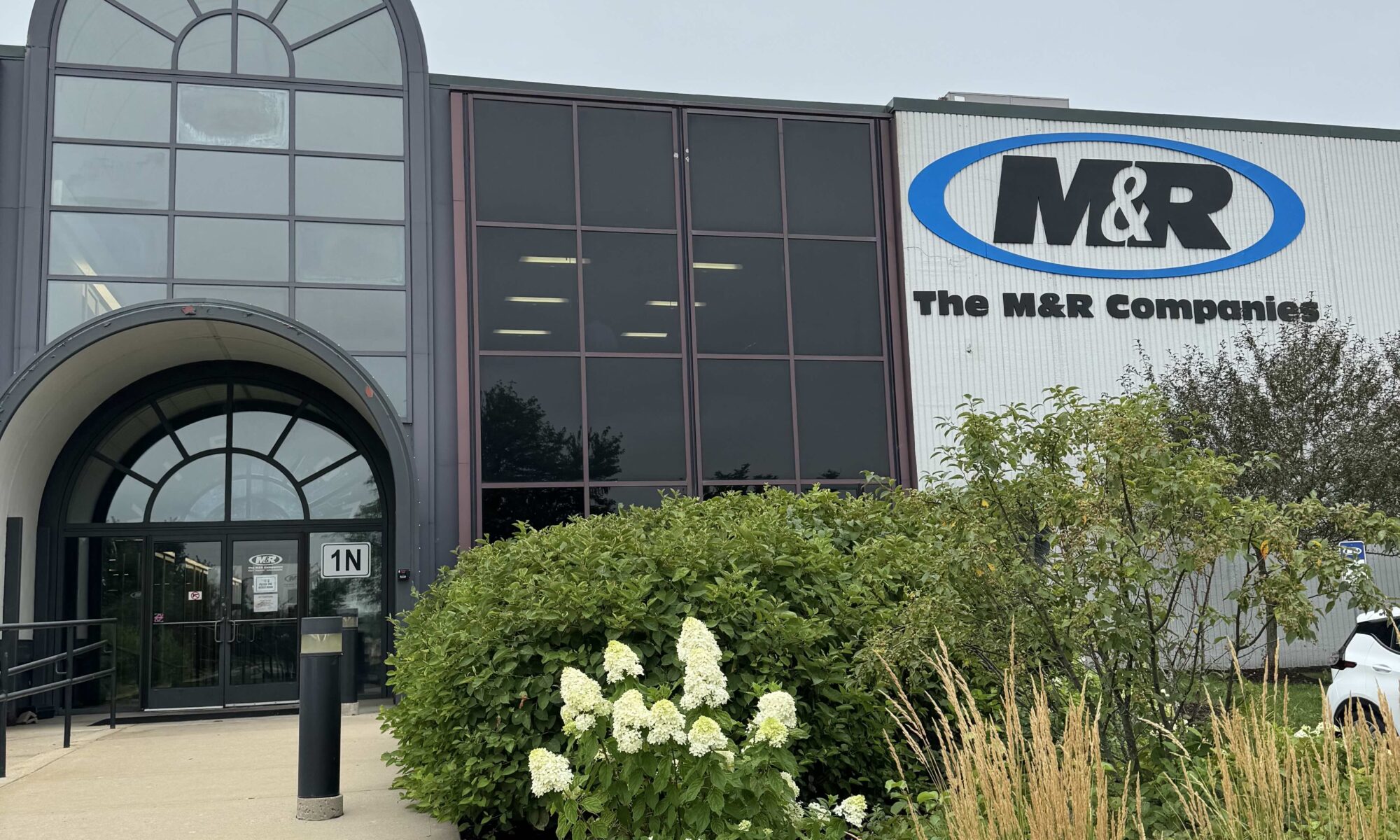
A Visit to M&R Printing Equipment in Chicago

A Visit to M&R Printing Equipment in Chicago

One of the Most Inspiring Weeks I Have Ever Experienced in the Textile Industry

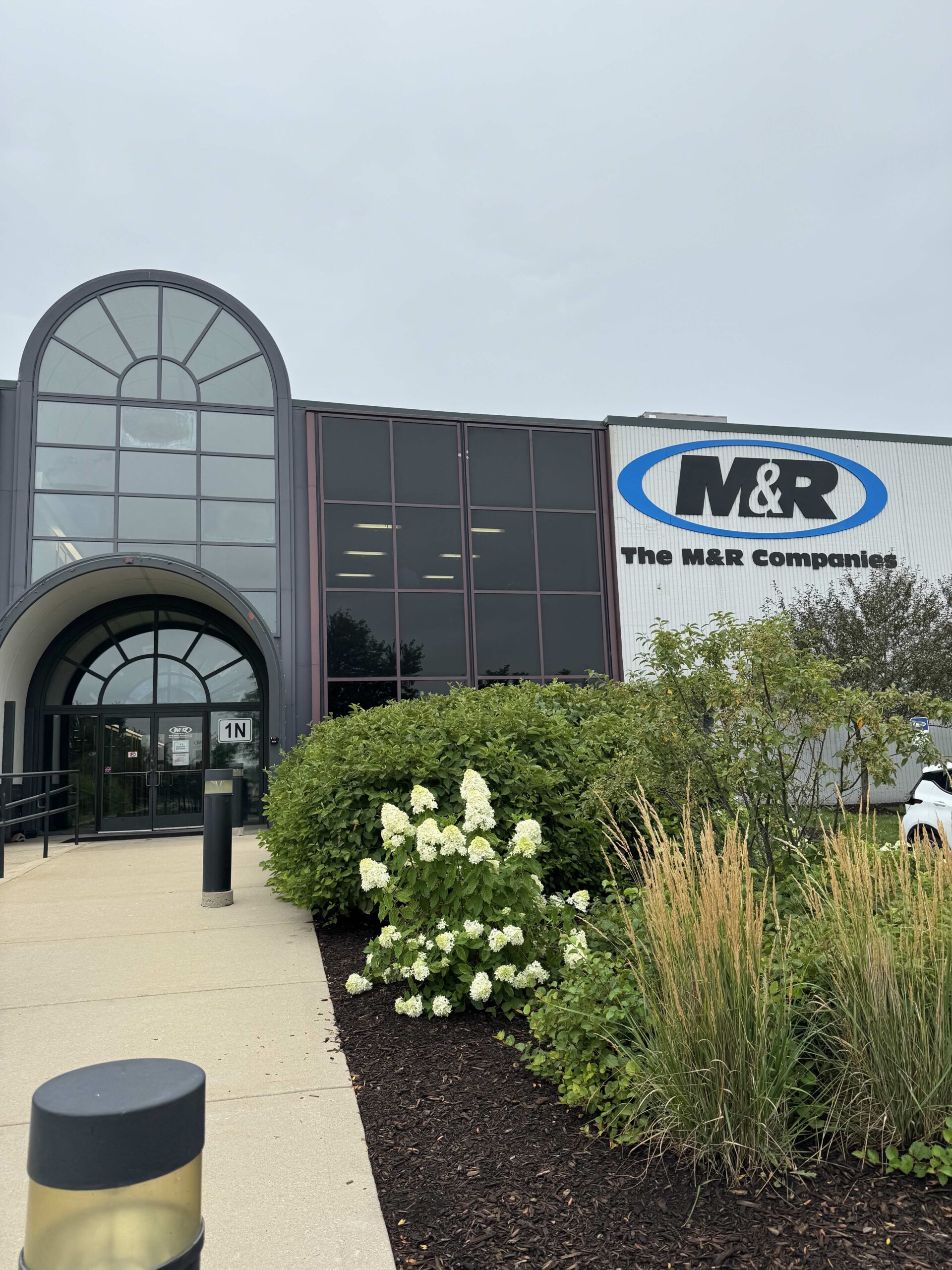
I recently had the privilege of spending an entire week with M&R Printing Equipment in Chicago—and what an extraordinary week it was.

I have known M&R for many years. Like most people in our industry, I was familiar with the name, the iconic blue machines, and the company’s outstanding reputation in screen printing. My heart was already beating blue long before this visit. But it was only during this week that I truly began to understand what lies behind the M&R name. And honestly, I was overwhelmed—in the very best possible way.

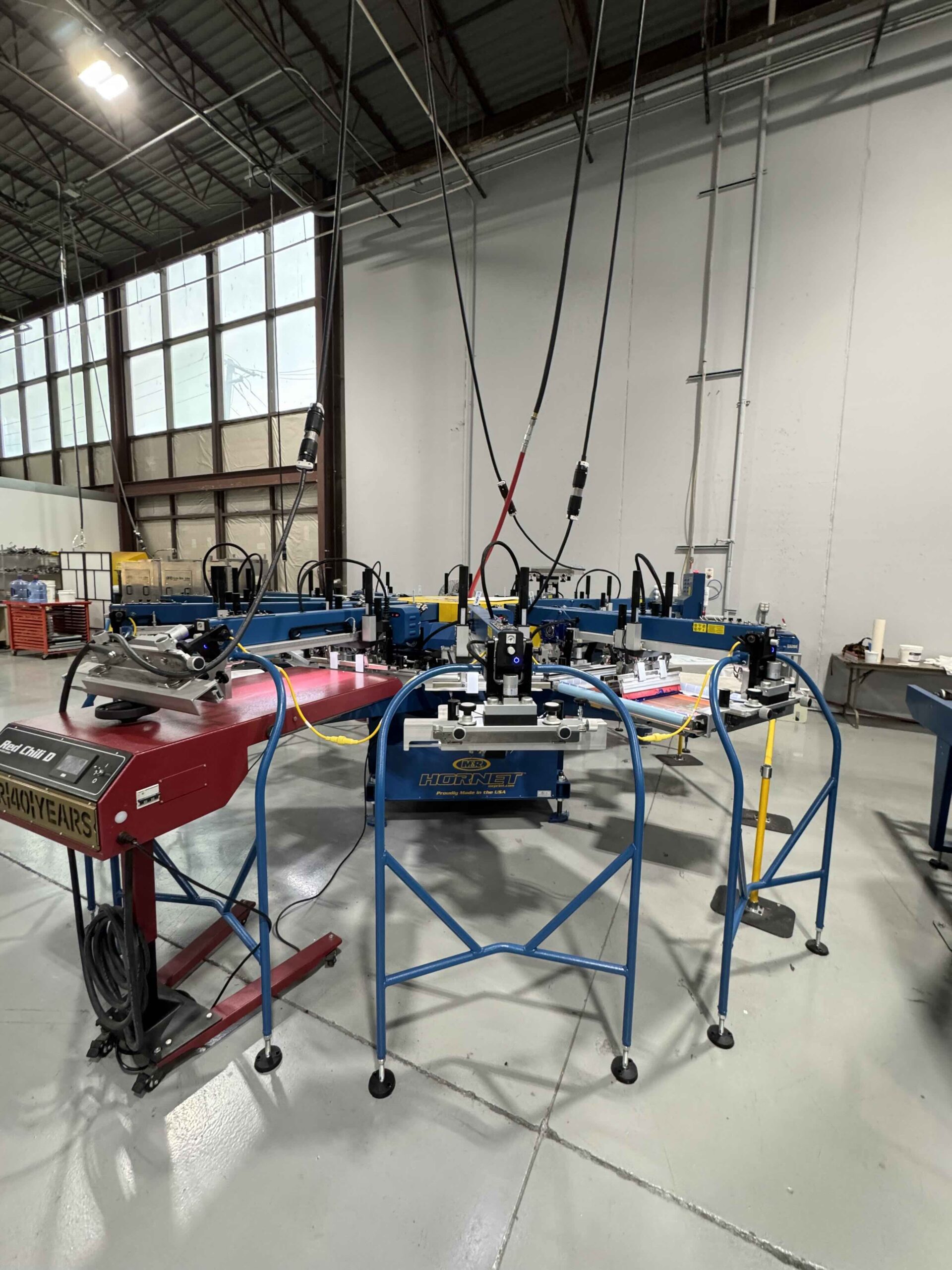
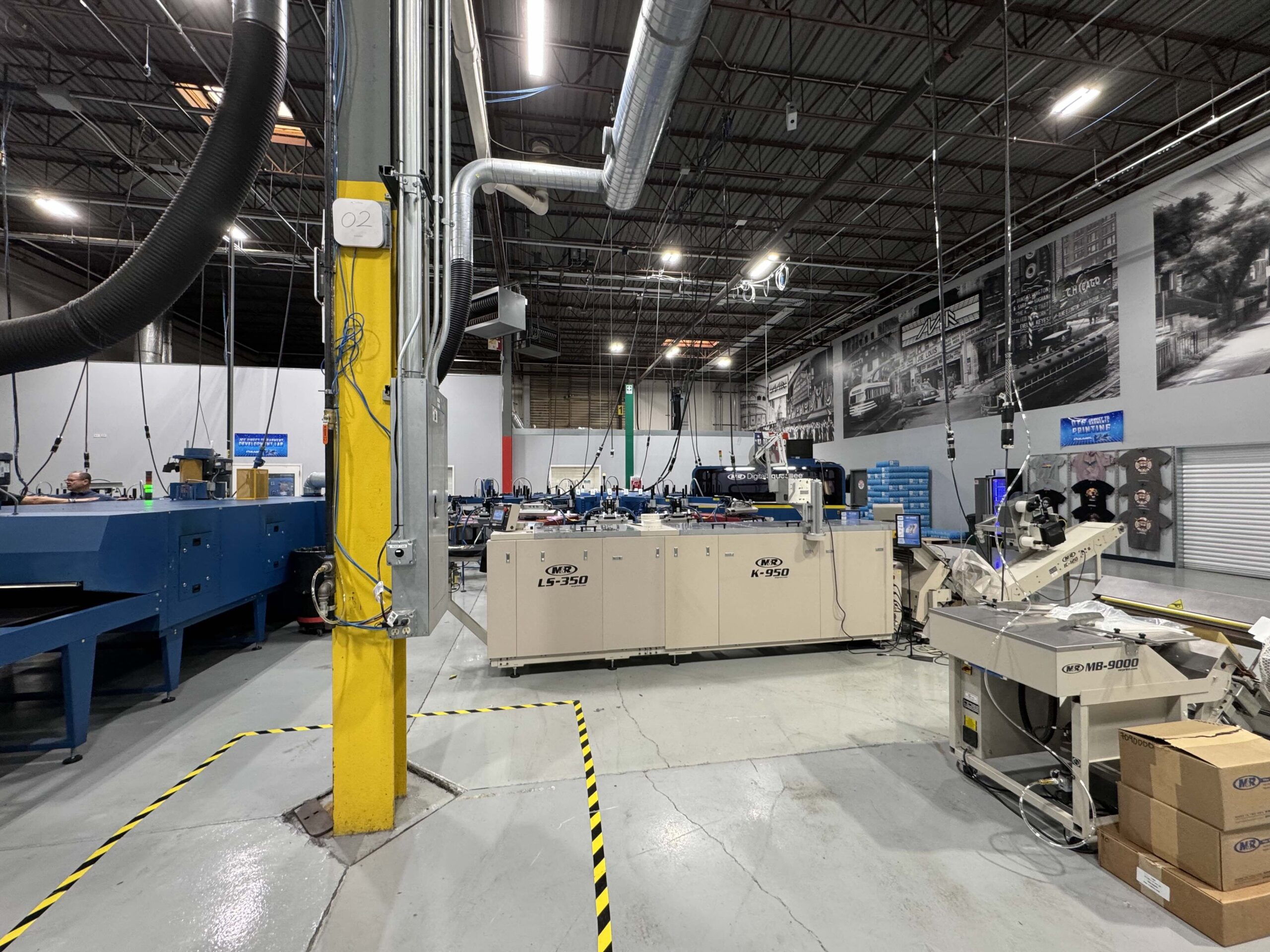
The scale of the production facility is truly impressive. Everything is enormous, yet remarkably well organized and structured. You can immediately see that decades of experience, engineering expertise, and continuous improvement have shaped every part of the operation. Every machine, every component, and every production process reflects a clear commitment to quality. Nothing appears to be left to chance. It is not simply about building equipment—it is about understanding what textile printers need in real production environments and creating machines that businesses can depend on every single day.

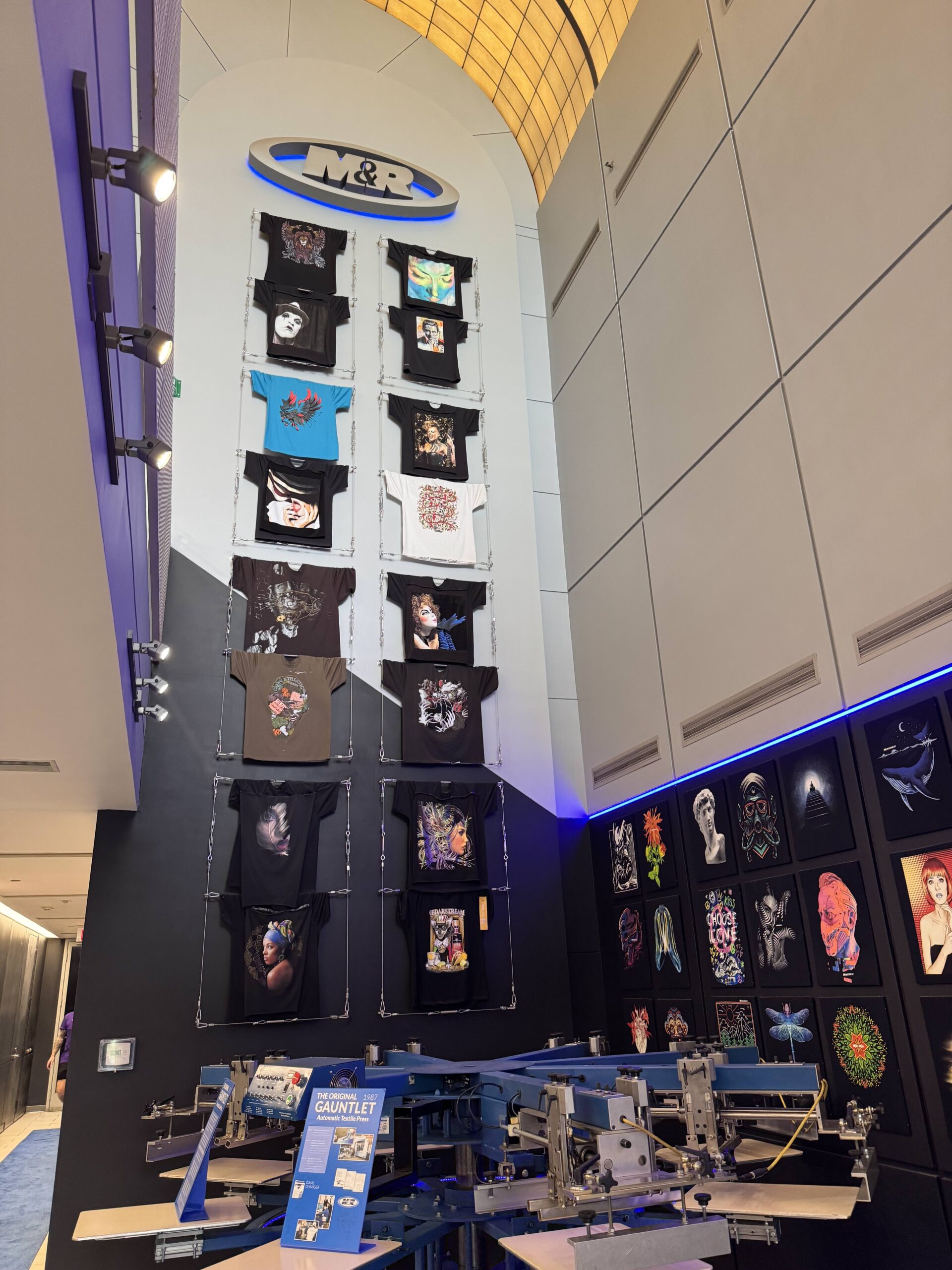
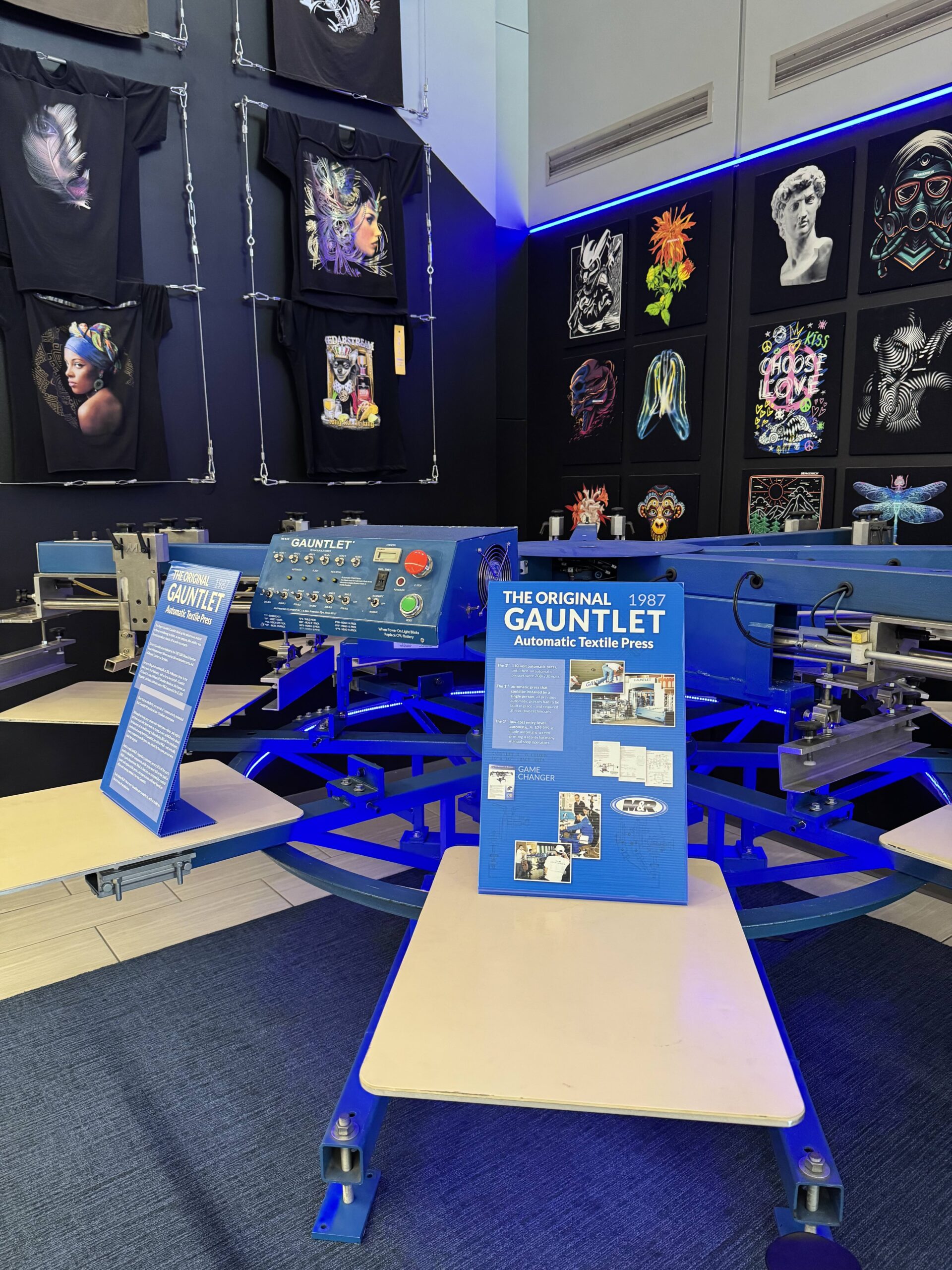
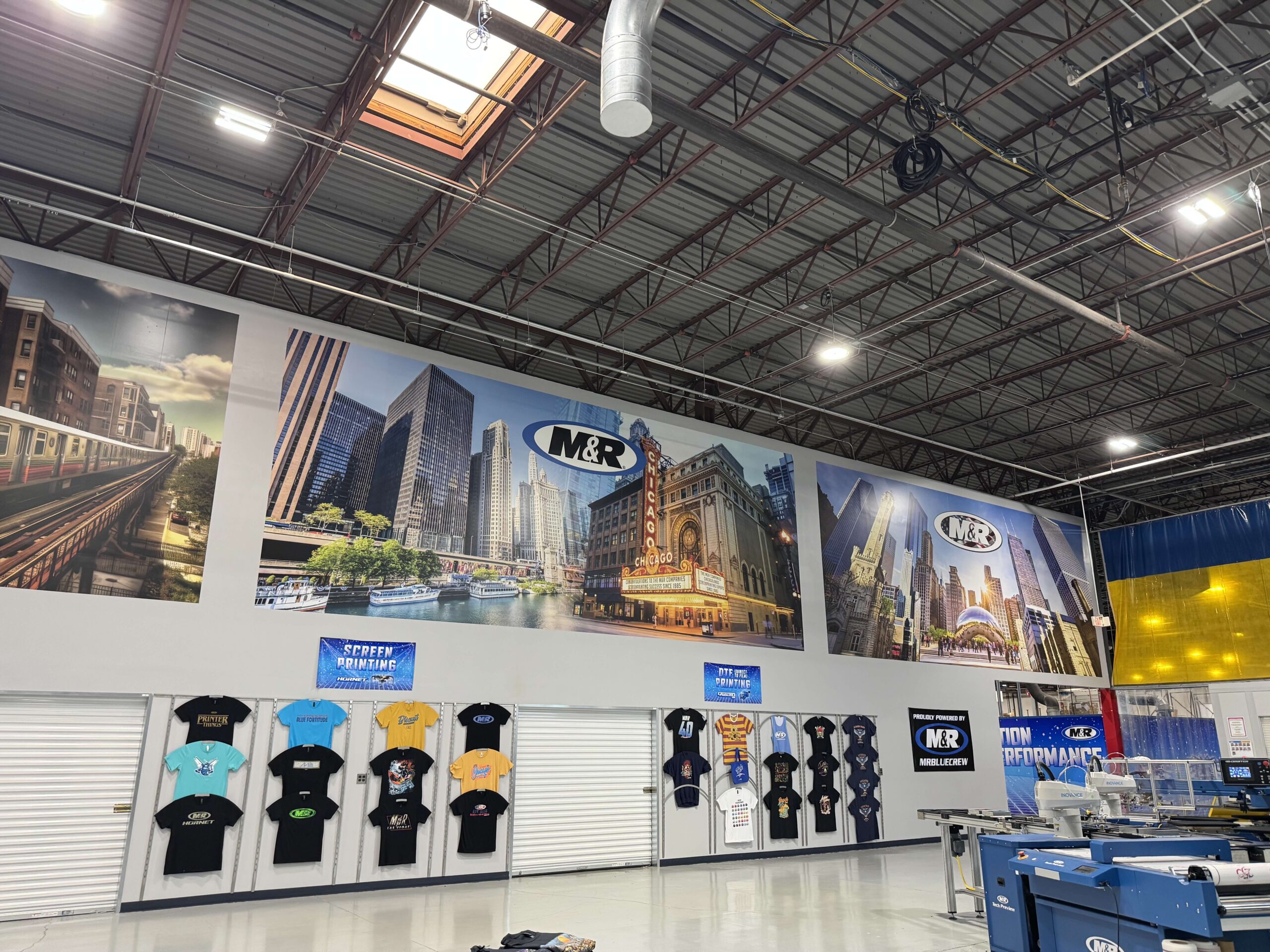
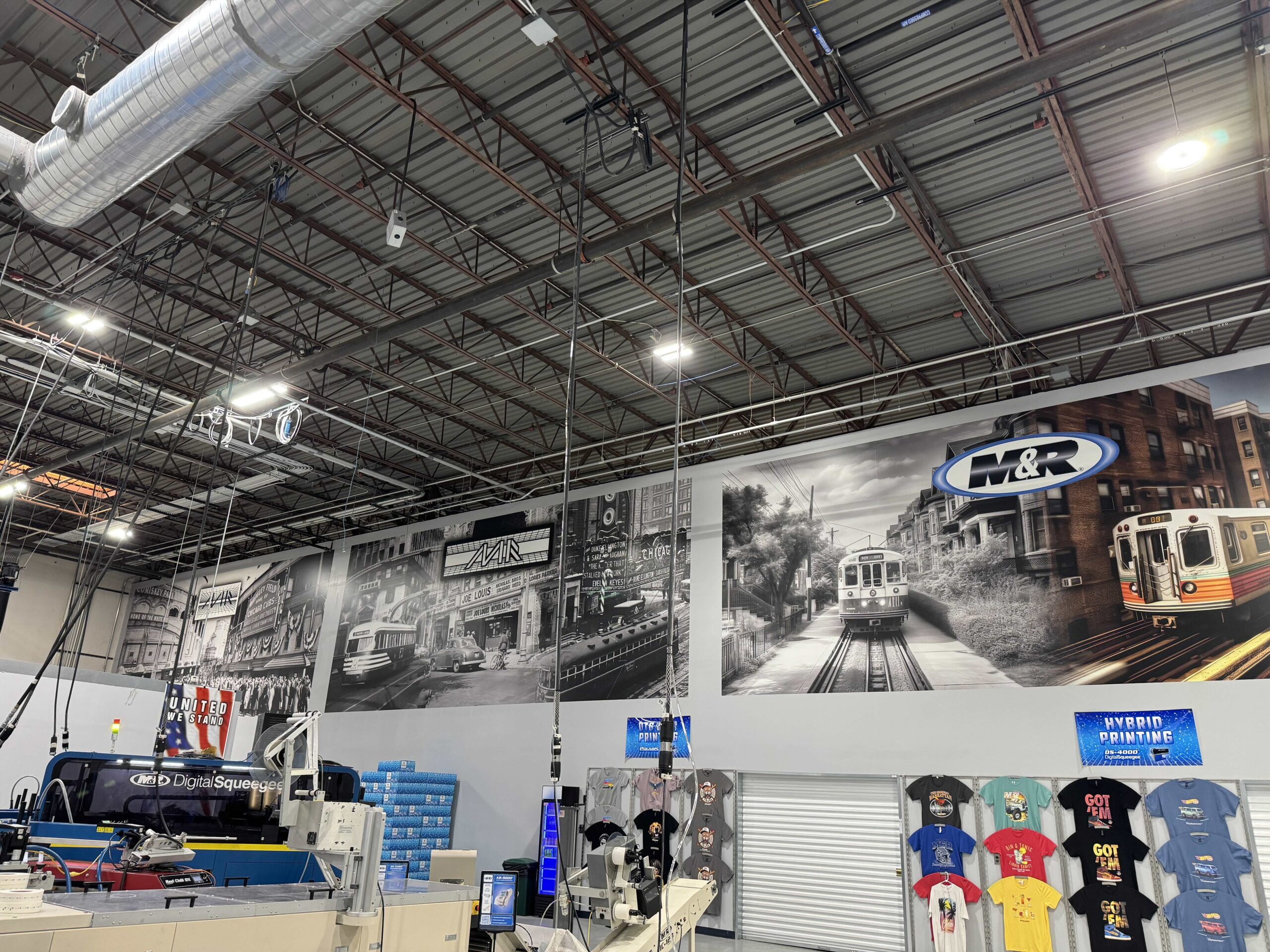
And then there is the showroom. Calling it a showroom almost does not do it justice. It feels more like an adventure park—or perhaps the ultimate playground for anyone whose heart belongs to textile printing. Walking into this space and seeing the range of screen-printing and digital-printing technologies working together is an experience in itself. It is a place where ideas become tangible, where technology can be explored firsthand, and where you immediately want to start printing, testing, experimenting, and discovering.

Of course, screen printing is deeply rooted in the DNA of M&R. The screen-printing presses demonstrate exactly why M&R has earned such an exceptional reputation throughout the industry. Their robust construction, precision, speed, and intelligent automation are impressive. However, what stands out most is the combination of productivity and reliability. These machines have clearly been developed by people who understand the reality of a print shop. They understand that consistent registration is essential. They understand the importance of repeatability and print quality. They understand that every second counts in high-volume production and that even small improvements in setup time, workflow, maintenance, or changeovers can have a significant impact on profitability. The level of engineering behind these screen-printing systems is remarkable. Every detail appears to serve a purpose: making production faster, more accurate, more efficient, and more reliable. But despite all this automation and engineering, the machines still provide printers with the freedom and control that make screen printing such a unique and fascinating craft. They combine the long tradition of screen printing with the possibilities of modern industrial production.

That balance is something very special. M&R does not simply build screen-printing machines. The company has helped shape the history of industrial textile screen printing—and it continues to develop the technology for its future.

Before this visit, my connection with M&R was primarily based on these screen-printing solutions. Today, that perspective has expanded significantly.

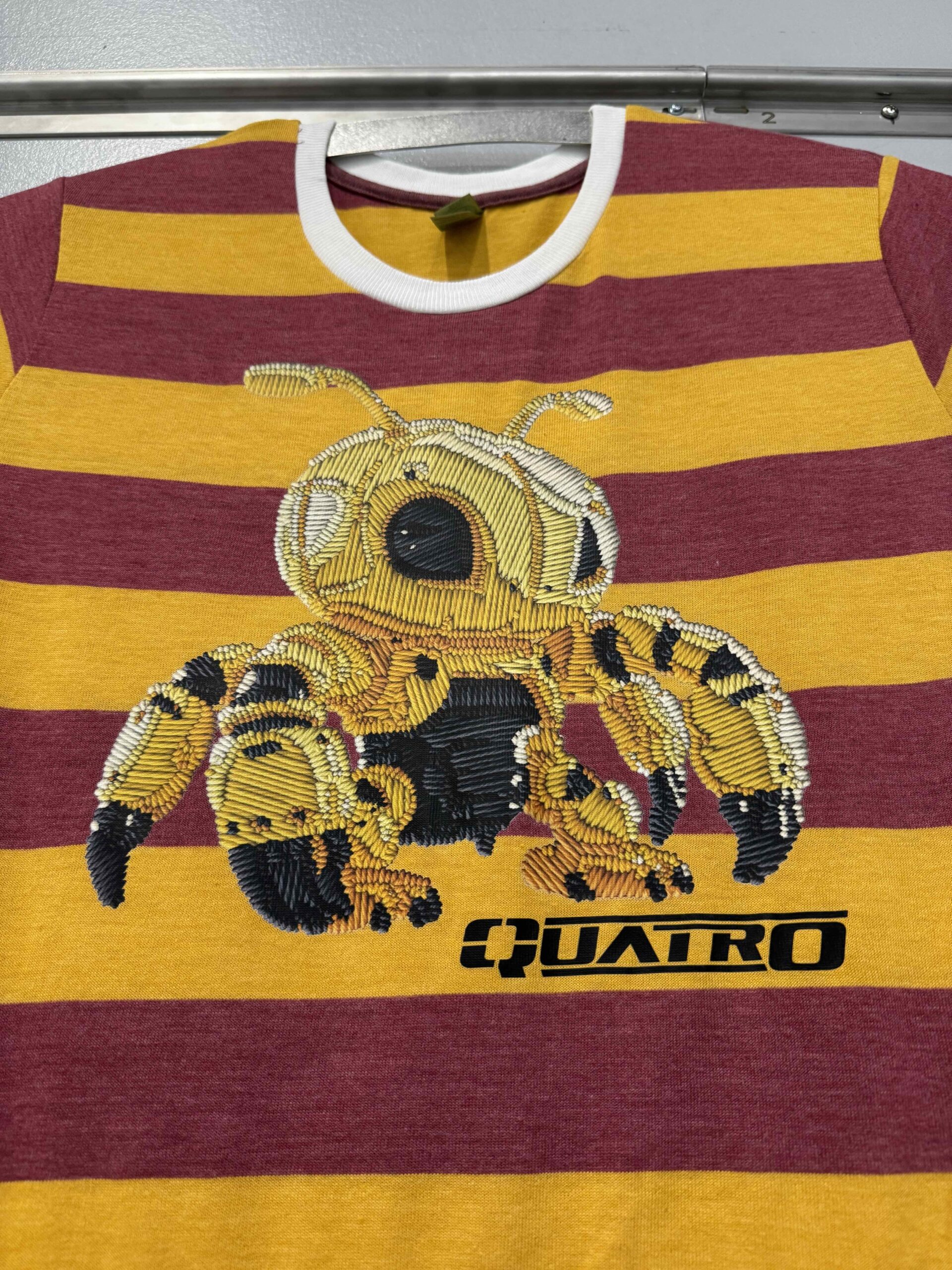
The digital printing technologies I experienced during the week—especially the Polaris and the premium Quatro DTF system—did not simply impress me. They genuinely convinced me. The print quality of the Polaris is outstanding. The details, colors, and overall results speak for themselves. However, one of the features that impressed me most was the highly controlled pretreatment application: the pretreatment is applied precisely and only where the actual design will be printed. Think about what that means. Instead of spraying pretreatment uncontrollably across an entire area of the garment, the system places it exactly where it is needed. This creates significant potential for cost savings, cleaner processes, greater consistency, and more efficient production. It is an intelligent answer to a challenge that has existed in direct-to-garment printing for a long time.

And M&R is not stopping there. Automation in DTF production (Orbiter) is already becoming a reality—and it became very clear during my visit that there is much more to come. There is a genuine vision behind these developments, supported by extensive technical knowledge and a deep understanding of what textile printers actually need in their daily production environments.

What impressed me most was how naturally the different technologies come together. M&R is not thinking only in terms of screen printing or digital printing. The company is thinking about the complete future of textile decoration. It understands that successful production environments will increasingly combine different technologies, depending on the design, quantity, application, turnaround time, and expectations of the customer.

This is where decades of screen-printing experience meet the enormous possibilities of digital production.

However, the technology alone was not what left the deepest impression on me. It was the people behind it. Speaking with the engineers, technicians, product specialists, and the entire M&R team completely changed my understanding of the company. Their knowledge is remarkable, but what impressed me even more was their passion. They do not simply develop, manufacture, and sell machines. They truly understand the printing process, the challenges their customers face, and the responsibility that comes with building equipment on which businesses and livelihoods depend. When you speak with these engineers, listen to their ideas, and experience the depth of their expertise, it is almost impossible not to believe in the products they are creating.

During this week, I realized just how innovative M&R truly is—and how much experience, knowledge, dedication, and forward-thinking engineering exist behind those blue machines.

Another aspect that deserves special recognition is the service and support structure. A machine is only as valuable as the system that supports it when something does not go according to plan. In our industry, downtime costs money. It affects production schedules, customer relationships, employees, and ultimately the success of an entire business. M&R clearly understands this responsibility. Behind the equipment is a structured and highly developed service system that customers can genuinely rely on. With intelligent processes and AI already being implemented, M&R is creating a service and support ecosystem designed for the future—one that aims to identify problems faster, provide solutions more efficiently, and give customers the confidence that they will not be left alone when support is needed. That kind of trust cannot be created through marketing. It has to be earned through knowledge, preparation, responsibility, accessibility, and genuine commitment to the customer.

This week in Chicago was intense and exhausting—but it was also one of the most inspiring weeks I have experienced in the textile industry. I returned home with far more than technical knowledge. I came back with a new perspective, renewed motivation, and a much deeper appreciation for the people, the culture, and the values behind M&R.

But most importantly, I returned with the wonderful feeling that, after this unforgettable week, I am now allowed to consider myself a part of the M&R family. That means more to me than I can easily put into words. Becoming part of a family is not about a logo, a machine, or a business relationship. It is about trust. It is about shared values, mutual respect, passion, commitment, and the feeling that you are surrounded by people who believe in the same vision. That is exactly what I experienced in Chicago. From the very beginning, I was welcomed with incredible warmth, openness, and generosity. I was not simply shown machines and production processes. I was invited into conversations, ideas, knowledge, experiences, and a community of people who genuinely care about this industry and about one another.

My heart was already beating blue before this visit. Now it beats a much deeper blue—and with great pride, it beats as part of the M&R family.

To the entire M&R team: thank you. Thank you for welcoming me with such warmth and openness. Thank you for sharing your time, your knowledge, your passion, and your vision with me. Thank you for answering every question, for showing me what is already possible today, and for giving me a glimpse of what the future of textile printing may look like.

Thank you for making me feel that I belong. I am truly overwhelmed by your hospitality, expertise, energy, and dedication to this industry. You have built much more than an impressive range of machines. You have built a culture of innovation, passion, knowledge, trust, and togetherness—and that is something people can feel when they spend time with you.

This was not simply a company visit. It was an experience I will remember for a very long time—and, without question, one of the best weeks I have ever spent in the textile industry.

I arrived as a visitor. I left as part of the M&R family.

And one thing is certain: You will not get rid of me now! 💙

Stay curious, stay creative – and may the print be with you.

If you have questions, want to brainstorm new worlds, or just geek out over print tech — my station is always open.
The Pink Elephant of Chroma – From Fibre to Fabric

The Pink Elephant of Chroma

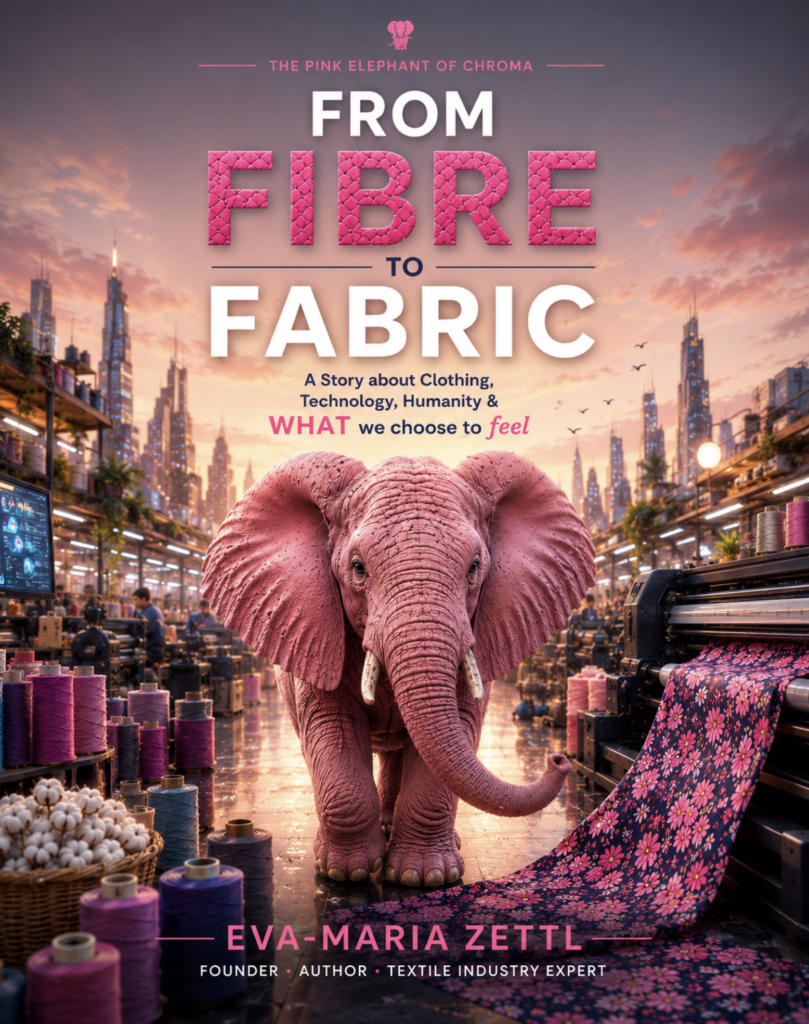
From Fibre to Fabric: A Story About Clothing, Technology, Humanity & What We Choose to Feel

Explores the invisible journey behind every garment, from the first fibre to the final fabric that touches the skin. Before clothing becomes fashion, workwear, identity, protection, or memory, it begins as something small and almost silent: a fibre with potential.

This book looks beyond production, efficiency, and technology to ask a more human question: what do we choose to feel? Clothing is one of humanity’s oldest technologies, but also one of the most intimate. It moves with us, protects us, shapes how we are seen, and influences how we experience ourselves. From natural fibres to engineered materials, from craftsmanship to automation, from fabric construction to finishing, every step carries a decision. A textile can be soft, strong, expressive, durable, comforting, or distant. It can connect people to a brand, a purpose, a memory, or a sense of belonging.

From Fibre to Fabric is written for textile professionals, designers, makers, brands, educators, and anyone who understands that clothing is never just material. It is technology close to the body, humanity woven into structure, and feeling transformed into form.

Stay curious, stay creative – and may the print be with you.

If you have questions, want to brainstorm new worlds, or just geek out over print tech — my station is always open.
The Pink Elephant of Chroma – The Pressure between Layers

The Pink Elephant of Chroma

The Pressure between Layers: How Screen Printing reveals what the Textile Industry forgot

What if the future of textile printing is not about speed, but about understanding?

This is the central question behind “The Pressure between Layers,” a book from the series “The Pink Elephant of Chroma” by Eva-Maria Zettl. It is not a traditional technical book about printing methods. It is not simply a comparison of DTF, DTG, and screen printing. Instead, it tells the story of a moment many production environments rarely name: the moment when a system works perfectly, yet something still feels missing.

In an industry shaped by automation, scalability, and efficiency, measurable results often dominate the conversation. Output numbers. Production speed. Cost per print. Error rates. Workflows become leaner, machines become faster, and processes become increasingly optimized.

But “The Pressure between Layers” asks a different question:

How does it feel?

Not only for the person who wears the finished textile, but also for those who produce, decide, design, and constantly balance quality, speed, and expectation.

Lumo and the Quiet Doubt Inside the System

Through the eyes of Lumo, a quiet yet impossible-to-ignore presence, the book opens a new perspective on textile production. Lumo does not simply observe machines, materials, and methods. Lumo senses the tensions that emerge between the layers.

Between speed and experience.
Between scale and quality.
Between technology and human perception.

This is where the book becomes especially powerful. It does not treat textile printing as a purely technical choice, but as an interaction between material, method, purpose, and feeling. A print is never just a print. It is surface, touch, durability, color, memory, and brand message all at once.

DTF, DTG, and Screen Printing: No Single Method Wins Alone

In many conversations about textile printing, people search for the one best solution. DTF is increasingly dominating production because it is flexible, efficient, and versatile. DTG redefines softness and directness on the garment. Screen printing remains the silent foundation of craftsmanship, especially where durability, color depth, and classic production quality matter.

But “The Pressure between Layers” makes one thing clear:

The future does not belong to one single method.

It belongs to the people and companies who understand when each method truly matters.

Not every order needs maximum speed. Not every brand benefits from the same hand feel. Not every design demands the same technical process. And not every production decision should be judged only by how quickly it can be completed.

The real expertise is not in owning a technology. It is in choosing the right method for the right context.

When Everything Works, but Something Is Missing

Many print shops, brands, and production decision-makers know this feeling. The workflow runs. The machines perform. Delivery times are met. The numbers look good.

And yet, sometimes there is a quiet doubt.

Is the result truly right?
Does the product feel the way it should?
Does the printing method fit the brand, the fabric, and the expectation?
Or was the most efficient solution chosen simply because it was available?

This is exactly where the book begins. It gives language to that feeling. It shows that quality is not made of technical parameters alone. Quality also emerges where experience, perception, and responsibility become part of the decision.

Who This Book Is For

“The Pressure between Layers” is written for people who see textile printing as more than a production step. It is for those who understand that printing is part of a larger value chain.

It is especially relevant for print shop owners who want to use their methods more consciously, textile professionals who constantly navigate between materials, technology, and customer expectations, brand builders who want to understand how print quality shapes brand perception, and production decision-makers who want to work not only faster, but better.

It is also for anyone who has ever felt that something can be missing, even when everything works.

A Book About Printing, but Also About Perception

In the end, “The Pressure between Layers” is more than a reflection on DTF, DTG, and screen printing. It is a call for more conscious decisions in an automated world.

Because the future of textile printing will not be defined by machines alone. It will be shaped by those who understand that every method speaks its own language.

DTF speaks of flexibility and speed.
DTG speaks of softness and closeness to the fabric.
Screen printing speaks of craft, depth, and durability.

So the real question is not:

Which method is best?

The real question is:

Which method understands this moment best?

That is the message at the heart of “The Pressure between Layers”: the future of textile printing does not belong to those who produce the fastest. It belongs to those who look more closely, listen more carefully, and understand what truly happens between the layers.

Stay curious, stay creative – and may the print be with you.

If you have questions, want to brainstorm new worlds, or just geek out over print tech — my station is always open.
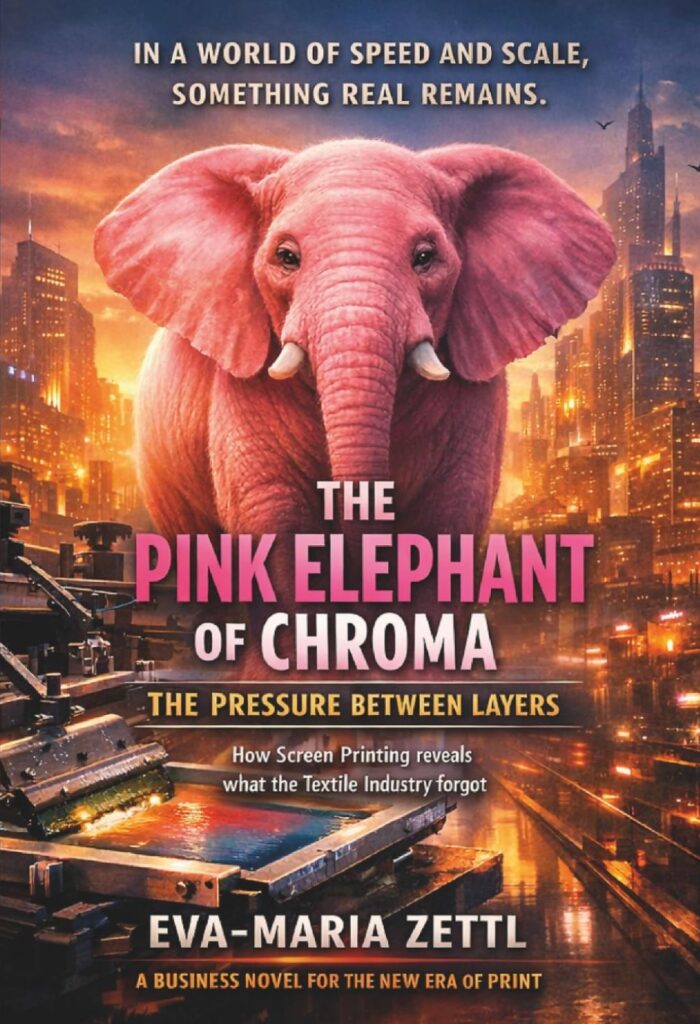
The Pink Elephant of Chroma – Between Print and Feel

The Pink Elephant of Chroma

Between Print and Feel - A Business Novel for the New Era of Print

In a world obsessed with speed, scale, and optimization, one question refuses to disappear: what happens when efficiency solves everything except experience?

The Pink Elephant of Chroma is a business novel set in a city where systems rule, data drives decisions, and production never slows down. DTF dominates the market. Output is high. Flexibility is unmatched. Everything works.

And yet, something feels off.

Through the journeys of Jonas, Elias, Lara, Mara, John—and the quiet presence of Lumo, the pink elephant—this story explores what numbers alone cannot measure: touch, perception, customer behavior, and the difference between what scales and what truly connects.

Blending technology, strategy, and emotion, Eva-Maria Zettl tells a modern print-industry story about DTG, DTF, customer experience, and the balance between efficiency and meaning.

This is not just a novel about printing.
It is a novel about decision-making, perception, and knowing when the right answer is not replacement, but understanding.

Stay curious, stay creative – and may the print be with you.

If you have questions, want to brainstorm new worlds, or just geek out over print tech — my station is always open.

Signal From Brazil – The UV-DTF Mission Begins

UV-DTF

My Journey Through the Print Universe

Welcome aboard my small creative spacecraft. If you know me, you know I’m constantly navigating through uncharted material galaxies, exploring new processes and tech that haven’t yet landed in every print shop. My homebase is fully equipped — transfer press, embroidery machine, sublimation printer, basic screen-printing kit… Everything I need for interstellar testing.

Signal From Brazil – The UV-DTF Mission Begins

The first signal came from far, far away — some friends in Brazil sent a transmission:

“Do you know anything about UV-DTF?”

My dashboard flashed red — UV-DTF had passed my radar, but I hadn’t made a proper landing in that zone yet. Since I prefer solid sources over half-baked nebula knowledge, I directed them to Commander Andrea Ruffato from SerTec — one of the true masters of UV-DTF in this galaxy.
And just like that, the topic drifted into orbit… for now.

Client on Approach – Branded Bottles & Bags

No sooner had I parked that topic on Satellite 3 than a local client hailed my station:

“Can you produce printed water bottles and cotton totes?”

Plotting a course for Planet Promo Merchandise, I began the scan…
Result: The bottles were cheap, but printing them. Intergalactically expensive. The more colors, the higher the cost per unit.
Same goes for the cotton bags — unless you’re ordering by the crate, screen printing is a resource-hungry asteroid.

And so I asked myself: In today’s warp-speed marketing cosmos — where campaigns shift overnight, messages rotate like moons around Jupiter, and personalization is king — how do we keep things affordable, high-quality, and fast?

My Gear: Creative Space Lab Ready for Lift-Off

Fortunately, my creative base station was fully operational:

      • Transfer press (for home testing)

      • Embroidery machine (galactic stitches, anyone?)

      • Sublimation printer (for bold, heat-friendly surfaces)

      • Screen printing kit (a trusty classic from the old world)

I decided to print some test DTF (Direct-to-Film) transfers on tote bags. The water bottle samples were already orbiting my desk. I quickly found a DTF contractor online, uploaded my files — logos, slogans, fonts… Ready for launch.

Then — just as I was about to confirm the order — a little cosmic popup appeared: „Now offering UV-DTF transfers.“

I paused. Curiosity engaged. Order expanded. Let’s explore this new star system.

UV-DTF Lands in My Workspace

Just 48 hours later, a delivery capsule arrived at my station.
The UV-DTF transfers?  Absolutely stellar quality. Sharp detail, rich colors — practically NASA-level resolution.

Application?

Ridiculously easy.
No heat, no press, no drama. No complicated layering or mystical tools.

Peel. Stick. Done.
It took less than two minutes to apply a logo to a bottle, and the results were mission-ready.

But of course — testing continues:

      • Will it hold up long term?

      • How does it react to daily use?

      • Dishwasher? UV rays? Rough handling?

That’s still under cosmic evaluation. But the first impression? ✨ Stellar.

So What Is UV-DTF Anyway?

UV-DTF stands for Ultraviolet Direct-To-Film.
It’s a futuristic process where UV-cured ink is printed onto a special transfer film. Once printed, the design is transferred to the desired surface using an adhesive film — no heat or press required.

It’s ideal for:

      • Water bottles

      • Glass & ceramics

      • Metal & plastic items

      • Wood, acrylic, packaging, labels

      • Basically, any smooth, hard surface that isn’t textile

    •  

Pros:

      • Photorealistic print quality — great for fine detail and complex designs

      • Strong adhesion to smooth surfaces

      • Water-, scratch-, and UV-resistant

      • Quick and easy to apply

      • Perfect for small batches or one-offs

 Cons:

      • Not suitable for textiles — won’t hold up well on fabric

      • Durability may vary (especially with dishwashers or heavy wear)

      • Not eco-friendly — film and adhesive are plastic-based

      • Long-term testing needed depending on object and use

And DTF on Textiles? A Quick Galaxy Update

I also used the opportunity to revisit DTF printing on fabric — and wow, has it evolved. What used to feel like a bulky sticker now feels soft and integrated.

The „plastic patch“ sensation is gone — replaced with something surprisingly natural. Depending on your printer and film, this process is now light-years ahead of what it once was.

Still, in the world of textiles, screen printing remains emperor, followed by DTG and DTF. But make no mistake: DTF is closing in fast — especially for small runs and complex designs.

UV-DTF – A Warp Jump for Modern Merch

UV-DTF is like discovering a new planet in the print universe:
Unexpected, highly functional, and full of creative potential.

It’s the perfect solution for fast-moving marketing needs, personalized products, prototypes, and short-run promotional goods.
In a galaxy where speed and flexibility matter, UV-DTF delivers.

Of course:
– Screen printing rules in the textile empire
– DTG and DTF are strong allies


But UV-DTF is a game-changer for hard surfaces

Final Transmission: Captain Andrea Ruffato

If you want to explore the UV-DTF galaxy for yourself — get the right machines, materials, or pro-level advice — I highly recommend contacting Captain Andrea Ruffato from SerTec.

He’s not only an expert, but the Han Solo of UV printing:
Fast, precise, full of knowledge, and just the right amount of rogue genius.

Stay curious, stay creative – and may the print be with you.

If you have questions, want to brainstorm new worlds, or just geek out over print tech — my station is always open.

FESPA Global Print Expo 2025 in Berlin

FESPA Global Print Expo 2025 in Berlin

more than just an event… it felt like coming home.

If you’ve ever been to FESPA, you know it’s not your average trade show. But this year in Berlin? It truly felt like a giant, joyful family reunion. The kind where you keep running into people you’ve missed, share stories late into the day, and walk away with your heart full and your head buzzing with inspiration.

I really had every intention of breaking out of my comfort zone this time. Hall 2.2 has always been my home base, but I told myself, “This year, I’ll make time to explore the rest!” Spoiler: I didn’t get very far. Every time I tried to wander off, I’d bump into someone I hadn’t seen in ages — a colleague, a partner, an industry friend. And of course, we’d stop. We’d talk. We’d laugh. We’d catch up properly. Ten steps, another hug. Another chat. And honestly? I wouldn’t have it any other way.

The conversations this year felt different — deeper somehow. Less about small talk, more about where we’re all at, both professionally and personally. People were open, honest, and hopeful. We talked about the challenges, of course — because let’s be real, they’re still out there. Budgets are tighter, timelines are shorter, and expectations are higher across the board. But what struck me most was the mood. It was better. Brighter. More grounded. There was a genuine sense of forward motion — not explosive or flashy, but steady and confident.

From a tech standpoint? No massive leaps, no game-changers — but plenty of meaningful progress. What we saw was refinement. Maturity. A lot of the solutions on display were smarter, faster, and more integrated than ever before. Automation is clearly the name of the game now, and many platforms feel truly future-proof. It’s as if the tools we’ve been waiting for have finally caught up with the vision we’ve been dreaming of. And that’s powerful.

But beyond the machines, the real magic was — as always — in the people. New faces became fast friends. Old connections sparked back to life like no time had passed at all. And yes, there were a few surprises along the way… some of which I’m still processing (and might share a bit more about later).

Looking back, these few days were packed with laughter, learning, and that unmistakable buzz you only get when passionate people come together around something they truly believe in. The textile printing world is evolving, no doubt. But events like FESPA remind me that at its core, this industry is still full of heart, resilience, and creativity.

So — from the bottom of my heart — thank you. To everyone I spoke with, shared a coffee with, or just exchanged a knowing smile in a crowded aisle… you made this week unforgettable.

And a special shoutout to my travel crew and the incredible team at Brother: thank you for the good vibes, the laughs, the late-night chats, and for being the absolute best partners-in-print a person could ask for. What a ride. Let’s keep it going.

Until next time, FESPA. ❤️

Final thoughts? Gratitude. Connection. Momentum.

FESPA 2025 wasn’t just about technology or trends — it was about people. About showing up, reconnecting, and remembering why we’re in this industry to begin with. The energy in Berlin reminded me that progress isn’t always loud — sometimes it’s quiet conversations, small upgrades, and steady belief in what’s possible. I’m heading home with a full heart, fresh ideas, and a renewed sense of purpose. And I genuinely can’t wait to see where we all go from here — together. Until the next chapter… stay bold, stay curious, and stay connected.

Feel it

Feel it – Or:

Why I Now Treat T-Shirt Shopping Like I'm on a Detective Mission.

Used to be, shopping for clothes was simple. I liked it? Boom, in the bag. Now – ever since I started working in the textile printing industry – things have changed. I stand in stores, run my hands over the shirts, scrunch them up a bit, and mutter: “Mhm… feels like DTF. Lower tier. Probably won’t survive three washes.”
My daughter Frida (14, eternally cool, TikTok-verified) stands next to me, utterly mortified. “Mum, can you please stop stroking T-shirts?!”

No, I can’t. Because I know what’s going on.

Fast Fashion – the Fast Food of the Fashion World.

Looks good, is cheap, gives you a quick hit of joy – and causes a huge mess in the long run.
Here’s some fun facts that aren’t quite as stylish as Frida’s latest TikTok-approved pants:

      • 100 billion clothing items are produced globally every year.

      • 60% of those end up in the trash within a year.

      • And get this: Every second, a truckload of clothing is burned or sent to a landfill.

      • Over 60% of fashion is made from polyester – i.e., plastic that will be around to haunt us for the next 200 years.

Pretty fab, huh?

But hey – we can do something about it. And it’s simple: feel.
It might sound like some new-age mumbo-jumbo, but it’s actually pretty straightforward.

Because you can feel quality.

Yes, even when it comes to printing techniques.
Take DTF, for example – sounds like a new TikTok dance move, but it’s actually “Direct to Film.” Often, it’s cheaply made – thick, hard, plastic-y. Wearing that feels like having a lunchbox glued to your chest.
But! DTF can also be really good – when it’s done right. Then the print is soft, flexible, and long-lasting. It feels like your favorite tee, not a single-use plastic sticker.

The same goes for DTG – Direct to Garment. If it’s done properly, the print feels almost invisible. Like magic. Or the opposite of Fast Fashion.

So: Eyes wide open when shopping.

And to all you producers out there: If you’re using DTF, do it right. There are some amazing systems out there that show that new technologies can be high-quality & sustainable. Please, no more lazy stickers pressed onto thin polyester – that’s neither fun nor smart.

And what can we, as consumers, do?

      1. Feel.

      2. Think.

      3. Ask Frida.
        (Joke – Frida buys based on likes, not fiber quality.)

But seriously:

      • Feel the fabrics.

      • Look at the labels.

      • Ask yourself: Will I wear this in three months? Or is this the fashion equivalent of a plastic straw?

Frida’s starting to get it. The other day, she said: “This print feels kinda… cheap.” I almost cried tears of joy – it was like she’d just painted her first organic cotton dreamcatcher.

Bottom line:

Fast Fashion is like a Tinder date: quick, shallow, often disappointing.
But good clothes? They stick around. They feel right. They grow with us. They survive more than just the first spin cycle.

So:
Feel it. Laugh it off.
And make better choices – with style and a little humor.

Feel Before You Buy

Working in textile printing has turned me into a T-shirt detective. I now judge clothes by how they feel—because quality (and sustainability) is something you can literally touch. Fast fashion might look good, but it’s wasteful and often poorly made. So next time you shop: feel the fabric, check the print, and think long-term. Good clothes last. And yes, even my TikTok-loving daughter is starting to get it.

Beyond ROI, Towards Infinite Possibilities

The Hidden Universe of Automation

Beyond ROI, Towards Infinite Possibilities

The question isn’t just “How fast will I get my money back?”—it’s “Where do I want my business to be in 5 years?”

Return on Investment (ROI) is often the first thing businesses look at when considering automation. And while it’s important—after all, every investment should pay off—it’s certainly not the only factor that matters.

Automation isn’t merely about seeing your money return quickly. It’s about long-term growth, sustainability, and future-proofing your business. Just like a mission into the vastness of Weltraum, or outer space, automation requires looking beyond immediate horizons. It involves preparing your organization for an expansive journey toward enduring innovation, adaptability, and resilience.

If your focus remains narrowly fixed on short-term ROI, you risk overlooking opportunities that unfold over a longer trajectory. True transformation comes from viewing automation as a strategic voyage: one that unlocks new possibilities, enhances efficiency, and positions your company to thrive, no matter what the future holds.

ROI is just one piece of the puzzle.

Employee Well-Being
A Happier, Healthier Workforce

People are the heart of any business, and a physically demanding job can take a toll on your team. Repetitive tasks like manual shirt removal lead to fatigue, strain, and even workplace injuries.

Consistency & Quality
The Key to Long-Term Success

ROI often highlights cost savings, but quality matters too. Automation ensures consistent precision, eliminating fatigue-related errors. The result? Flawless prints, perfectly handled shirts, and fewer rejects—every time.

Reliability & Planning Security
No More Production Delays

One of the biggest challenges in traditional workflows is unpredictability. Employees call in sick, shift schedules get disrupted, and suddenly your production is behind schedule.

Competitive Advantage – Staying Ahead in a Changing Industry

Automation as a Gateway to Happier, Healthier Teams

Visualize your team as astronauts preparing for an ambitious journey into space. Without automation, they risk becoming overwhelmed, exhausted, and stressed—much like astronauts forced to rely on outdated and cumbersome equipment. However, when automation enters the picture, your team becomes like a skilled, empowered crew equipped with cutting-edge technology. Automation takes care of repetitive, physically demanding, and monotonous tasks, significantly reducing workplace injuries, fatigue, and burnout. Your workplace transforms into a vibrant, engaging environment, echoing the peaceful harmony of a modern space station orbiting serenely above Earth, where the crew can perform at their best in comfort and safety.

Consistency and Quality: Precision Navigation Through Complexity

Consistency and quality are critical for successful missions, whether on Earth or in the far reaches of space. Imagine the intricate precision necessary for astronauts to navigate accurately through the stars and planets. Similarly, automation ensures your business operates with absolute accuracy, refining processes and minimizing costly errors. This high level of consistency ensures your products and services meet—and even exceed—customer expectations every time. Just as a spacecraft maintains its smooth and precise trajectory through space, automation helps your business navigate the complexities of the marketplace with confidence and reliability.

Reliability and Security: Mission-Critical Stability

Reliability and stability aren’t just desirable—they’re absolutely essential in space missions. Every piece of equipment, every system, must function flawlessly to ensure mission success. Automation brings this same level of mission-critical reliability to your business operations. By eliminating downtime, delays, and unexpected interruptions, automation provides a secure operational environment, shielding your business from the unpredictable disruptions inherent in manual processes. Businesses leveraging automation gain a powerful competitive advantage, propelling forward smoothly, while their competitors remain stuck troubleshooting traditional manual methods.

The Hidden Value of Automation.

A Happier, Healthier Workforce

By automating these tasks, you’re not just boosting efficiency—you’re creating a healthier, more supportive work environment. This helps prevent burnout, reduces strain, and enhances overall job satisfaction. When employees feel valued and comfortable, they are more engaged, productive, and committed, which also helps save on hiring and training costs in the long run.

The Key to Long-Term Success

With automation, you ensure consistent, high-precision results every time—eliminating variations caused by fatigue or human error. The result? Perfectly handled shirts, flawless prints, and fewer rejects. Higher quality leads to happier customers, a stronger brand reputation, and more repeat business—factors that may not always appear in ROI calculations but are essential for long-term success.

No More Production Delays

Automation ensures consistent, 24/7 performance—no absences, no slowdowns—making planning easier and production more reliable. This helps you meet deadlines smoothly, without stress or last-minute adjustments.

Work smarter, print faster, grow stronger!

Preparing for Liftoff: Navigating Industry Transformation

Industries like printing and textiles are evolving rapidly, presenting increasingly complex challenges. Businesses still tied to traditional manual methods often struggle with labor shortages, unpredictable production schedules, rising operational costs, and growing customer demands. Automation directly addresses these challenges, enabling you to streamline operations, scale efficiently, and remain competitive in a rapidly changing landscape. Automating your business processes today positions you for sustained long-term success, comparable to establishing a resilient colony on a distant, promising planet—ready to adapt and thrive for generations.

Automation and Space Exploration: Expanding Horizons

Just as humanity’s exploration of space has revealed countless new possibilities, inspired groundbreaking innovations, and sparked our collective imagination, automation similarly revolutionizes how businesses operate, innovate, and grow. Automation goes beyond mere efficiency, freeing your team to focus their talents on strategic thinking, innovation, and creativity. By automating routine tasks, you unlock new opportunities and solutions, allowing your enterprise to reach heights previously unimagined. Like exploring uncharted galaxies, embracing automation enables you to discover completely new realms of potential and profitability.

The textile printing industry is evolving rapidly, and while that brings challenges, it also opens up incredible opportunities. The key to staying ahead? Automation. Imagine a workplace where your team isn’t bogged down by repetitive, physically demanding tasks. Instead, they can focus on creativity, quality, and growth—while smart technology for example takes care of the heavy lifting. That’s exactly what automation offers:  seamless, reliable, and highly efficient solutions designed to help your business thrive.

If you’ve been thinking about automation but weren’t sure if the time was right—this is your sign! Let’s take a look at the challenges businesses are facing today and how automation can turn them into opportunities.

The Challenges of Traditional Production

Labor-intensive jobs are hard to fill and retain. Automation reduces repetitive tasks, improving job satisfaction and productivity—a win-win!

For example: Manually removing shirts is exhausting and can lead to injuries, fatigue, and downtime. Automation reduces strain, keeping your team healthier, happier, and more productive.

For example: If key staff members are absent, production can quickly fall behind, increasing pressure on the rest of the team. Automation keeps your workflow reliable and consistent—runs smoothly every day, ensuring you meet deadlines without stress.

Customers expect quality, speed, and competitive pricing. Automation boosts efficiency, ensuring faster production, consistent quality, and higher profits.

Launching into a Future of Infinite Potential

Investing in automation isn’t simply about deploying new machinery or software—it’s about embarking on an exciting journey toward sustainable growth, continuous innovation, and unrivaled competitive advantage. Automation is your launchpad, enabling your business to explore new markets, optimize efficiency, and capture previously untapped opportunities. Like space exploration, automation is an ongoing journey—one of constant evolution, adaptation, and discovery.

Together, let’s embrace the immense power of automation and boldly propel your business into an incredible future—because when it comes to potential, even the sky isn’t the limit; it’s just the beginning of our endless adventure into the cosmos!

Automation: Your Launchpad to Limitless Growth and Innovation

Automation isn’t just new machines or software—it’s your gateway to sustainable growth, constant innovation, and unmatched competitive advantage. Companies like aeoon Technologies, ROQ, and KTK deliver state-of-the-art solutions, especially in direct-to-garment printing, where aeoon customizes automation precisely to your unique business needs. Let’s embrace automation together and boldly propel your business into an extraordinary future. Because when it comes to potential, even the sky isn’t the limit—it’s just the beginning!

Marketing & Sales: The Rocket Fuel for Success

Marketing & Sales in the Textile Industry

Navigating New Frontiers, Elevating Businesses, and Reaching for the Stars!

There are so many exciting topics I could write about, but one is particularly close to my heart. A good friend recently told me after I showed him a nearly finished project: „You have a gift.“

But I don’t see it as a special gift. It is my passion, my drive, and my deep commitment to what I do. I have never doubted or looked it up in textbooks to see if I was on the right path. Everything I do for a company is done with 100% dedication and a clear goal: to move the business forward and create real value. By the way, I’m not great at handling compliments!

For me, everything starts with understanding the product and the processes behind it. Only those who truly know how something is made can market it authentically and effectively. Whether it’s traditional techniques like screen printing—with its many details such as layout preparation, exposure, screen creation, the right squeegee, and mesh selection—or modern methods like DTF (Direct-to-Film) and DTG (Direct-to-Garment), knowing the process allows you to communicate its benefits clearly and make them tangible for the customer.

Marketing & Sales: The Rocket Fuel for Success

Marketing and sales in the textile industry are like a space mission. In the past, launching a successful product was like taking off in a simple aircraft—strong quality and competitive pricing were enough to reach cruising altitude. Customers were more loyal, decision-makers relied on trusted business relationships, and marketing was more about trade shows, printed catalogs, and face-to-face interactions.

Today, however, the landscape is like navigating deep space. Customers are more informed, connected, and demanding than ever. They compare products online, expect transparency, sustainability, and a personalized approach. Companies must not only develop innovative products but also present them with a strong, consistent brand presence. Just as astronauts need precise calculations and multiple support systems to reach the moon, businesses need social media, influencer marketing, data-driven online campaigns, and automated sales processes to stay on course. Companies that fail to adapt and continuously refine their strategies quickly lose their trajectory.

That’s why marketing and sales must go hand in hand today. A great product alone is not enough—it needs to be seen, understood, and appreciated. The goal is not just to close a sale but to build a lasting relationship with the customer. Authenticity, trust, and clear communication are the keys to success.

The Role of Marketing in the Entire Journey

Marketing is not just about promoting a product—it is the navigation system that keeps a business moving forward in today’s textile printing industry. From the initial countdown of brand awareness to the successful landing of a long-term customer relationship, marketing plays a crucial role at every stage.

    • Brand Identity & Positioning: A strong marketing strategy defines how a company is perceived in the industry. Just like a spacecraft must have a clear flight path, a business must stand out with a unique value proposition.

    • Customer Education & Engagement: Modern marketing is not just about selling—it’s about informing, educating, and engaging customers. Businesses that provide valuable content, tutorials, and case studies help customers make better decisions and gain trust.

    • Omnichannel Strategy: The customer journey is no longer linear. Buyers interact with brands across multiple touchpoints—social media, websites, trade shows, and even word-of-mouth. A successful marketing strategy connects all these channels seamlessly, just like a mission control center keeps all aspects of a space journey coordinated.

    • Data-Driven Decision Making: With AI and analytics, businesses can track customer behavior, preferences, and buying patterns to create more targeted campaigns, much like how astronauts use precise calculations to adjust their trajectory.

    • Sustainability & Ethical Marketing: Customers today expect transparency in supply chains, eco-friendly materials, and ethical production. Just as space exploration aims for sustainability in long-term missions, businesses that market their sustainability efforts authentically gain a competitive edge.

    • Long-Term Customer Success: Marketing isn’t just about attracting new customers—it’s about helping them succeed with the product. A customer who thrives with their purchase will not only return but also become an advocate for the brand.

The Modern Sales Manager: A Mission Specialist

A great sales manager in the textile industry today is like an astronaut preparing for a space mission—there’s no room for error, and success depends on expertise, adaptability, and teamwork. Here are the key skills that define a successful sales manager today:

    • Industry Knowledge & Product Expertise: Understanding the full textile production chain, from materials to advanced printing techniques like DTG, DTF, and screen printing, is essential.
    • Customer-Centric Approach & Relationship Management: Customers buy solutions, not just products. Building trust and long-term relationships through transparency and service is key.
    • Digital Sales Competence: Social selling, CRM systems, LinkedIn, Instagram, and TikTok are now indispensable sales tools.
    • Adaptability & Innovation: The textile industry moves fast, and success requires continuous learning and openness to new trends.
  •  
    • Negotiation Skills & Persuasion: Communicating value beyond price is essential in a competitive market.
    • Sustainability & Ethical Values: Customers demand eco-friendly, ethically produced textiles, making sustainability knowledge a competitive advantage.
    • Multichannel Strategy & Global Mindset:  Sales now happen across e-commerce, marketplaces, trade shows, and direct sales channels globally.

A successful sales manager today is not just a seller but a strategist, an advisor, and a navigator in an ever-changing universe of market demands and technological advancements.

ROI, Break-even & Financial Metrics:
Calculating the Trajectory

Financial metrics like Return on Investment (ROI), Break-even point, and Total Cost of Ownership (TCO) are as important to businesses as fuel calculations are to a rocket launch.

    • ROI: Customers view purchases as investments, not costs. Sales managers must demonstrate how quickly investments will pay off.

    • Break-even Point: Just as astronauts need to know how much fuel is needed to escape Earth’s gravity, businesses need to know when they will start making a profit.

    • Margins & Contribution Margins: Customers calculate profitability carefully. A great sales manager should highlight how better technology can improve margins.

    • TCO: Beyond purchase price, customers consider maintenance, consumables, and energy costs.

    • Value Over Price: Customers pay more for long-term efficiency, sustainability, and higher-quality output.

Aftersales: Ensuring a Safe Landing

The mission isn’t over once the sale is made—aftersales is like ensuring a spacecraft successfully returns to Earth. Customers expect ongoing support, service, and strategic advice post-purchase. A strong aftersales process builds customer loyalty, increases revenue, and differentiates brands.

    • Customer Loyalty & Repeat Purchases: A strong aftersales service ensures customers return for upgrades and consumables.

    • Technical Support & Troubleshooting: Many textile businesses rely on specialized machines; fast, competent support is invaluable.

    • Training & Education: Modern printing technologies require education. Webinars, tutorials, and workshops add value.

    • Cross-Selling & Upselling: Aftersales provides opportunities to introduce complementary products or upgrades.

    • Brand Reputation & Referrals: Excellent aftersales service leads to positive reviews and word-of-mouth recommendations.

Reaching for the Stars

The textile industry is more challenging than ever but also full of opportunities. Companies that embrace deep product knowledge, strong marketing and sales strategies, financial transparency, and outstanding aftersales service will thrive in today’s market.

Marketing is no longer just an add-on—it is the engine that drives growth and success. Like a well-planned space mission, success in today’s industry requires precision, adaptability, and innovation. Those who truly understand their customers, provide real solutions, and leverage modern marketing will not only stand out but also achieve long-term success—reaching for the stars and beyond.

A Cosmic Perspective

The textile printing industry is like the universe—constantly expanding, full of opportunities, and driven by innovation. Just as stars need gravity to form, brands need strong marketing to attract customers. Digital campaigns, sustainability, and personalization act as the forces shaping success, much like cosmic elements creating new galaxies. In sales, relationships are the rocket fuel. While automation and e-commerce streamline processes, trust and flexibility remain the guiding stars. 

Milow: The Ultimate Automation Powerhouse for Future-Ready Textile Production

Milow Software Solutions

The Ultimate Automation Powerhouse for Future-Ready Textile Production

Imagine a world where every T-shirt, hoodie, and embroidered jacket is created with the precision of a space station docking maneuver. A world where production errors are as rare as an asteroid hitting your backyard. A world where every order, no matter how big or small, is handled with the efficiency of a high-tech control center at NASA.

Now, stop imagining—because that world is already here. Welcome to the future of textile decoration, powered by Milow, the automation software that takes your workflow to the next level – or should we say, to the stratosphere!

In today’s fast-paced e-commerce and textile production environment, businesses must move at warp speed to keep up with demand. Customers expect quick turnarounds, flawless prints, and seamless order processing—and they won’t hesitate to switch brands if they don’t get it. That’s where Milow comes in. By eliminating human errors, streamlining production, and integrating seamlessly with e-commerce platforms, Milow ensures that your production process is faster, smarter, and more efficient than ever before.

Whether you’re a small print shop looking to scale or an enterprise-level manufacturer producing thousands of garments daily, automation is no longer a luxury—it’s a necessity. The question is: Are you ready to take off into the future of textile production? If so, Milow is the mission control you’ve been waiting for!

Why Automation is the Future (Even in Space!)

Automation is transforming industries across the globe, and the textile production sector is no exception. In today’s fast-paced world, where customers expect instant gratification and seamless service, businesses must adapt or risk being left behind. Manual processes are no longer sustainable—errors, inefficiencies, and production bottlenecks can cost valuable time and money.

Just imagine a spacecraft preparing for launch. Every step of the process must be meticulously planned and executed with precision. A single miscalculation could mean mission failure. Similarly, in textile production, a single mistake—like a wrong design, incorrect pretreatment, or an order mix-up—can lead to delays, lost revenue, and unhappy customers. This is where automation steps in as the ultimate game-changer.

Automating your production workflow isn’t just about speed; it’s about consistency, quality, and scalability. Unlike human workers, automated systems don’t get tired, distracted, or make costly errors due to oversight. They ensure that every process—from order intake to final shipment—is carried out with laser-sharp precision.

But automation isn’t just about keeping up with demand—it’s also about expanding possibilities. Think of how space missions have evolved from manual calculations to computer-assisted navigation. In the same way, automation in textile production allows businesses to explore new frontiers, whether that’s increasing output without adding staff, introducing new customization options, or effortlessly integrating with multiple sales channels. Milow is designed to provide this level of reliability and efficiency. It functions as the mission control of your production, ensuring that every order flows through the system with seamless coordination—just like a well-orchestrated space launch. By automating tasks like order sorting, printing, quality control, and shipping, Milow enables businesses to operate at light speed, reducing turnaround times while maintaining top-notch quality.

The reality is simple: automation is not the future—it is the present. Businesses that embrace it will stay ahead of the competition, while those that resist will find themselves struggling to keep up. Whether you’re producing 100 shirts a week or 10,000, automation ensures that every garment is processed efficiently, accurately, and cost-effectively.

With Milow, you don’t just keep up with the industry—you lead it into the future. Just like astronauts need perfectly timed and error-free operations to survive in space, businesses need efficiency, accuracy, and adaptability to thrive in textile production. That’s where automation comes in! A fully automated workflow ensures that orders fly through the system without unnecessary delays, human errors, or mix-ups that could cause customer frustration.

Milow isn’t just a tool; it’s your mission control for textile production. It integrates hardware and software seamlessly, ensuring that from order intake to final shipment, everything runs smoother than a spaceship gliding through the cosmos.

How Milow Revolutionizes the Workflow

In the textile production universe, every second counts. Orders need to be processed faster than ever, customers expect flawless products, and businesses must remain agile to stay ahead of the competition. Just like a well-coordinated space mission, where each component plays a crucial role, a textile production workflow requires precision, synchronization, and efficiency. This is exactly where Milow takes automation to the next level.

Step 1

Order Reception – No More Lost Orders!

In a manual system, orders can get misplaced, duplicated, or delayed, leading to frustrated customers and logistical nightmares. But with Milow, every order is instantly categorized and tracked, ensuring nothing falls through the cracks. Orders flow into the system from multiple channels—whether it’s Shopify, Shopware, or even social media marketplaces like Instagram and Facebook. No matter where the order originates, Milow automatically processes it in real-time, ensuring it is ready for production without manual intervention.

Imagine a mission control center receiving data from satellites orbiting different planets—every order is a signal, and Milow ensures each one is processed smoothly, no matter the volume. Whether you receive 10 or 10,000 orders a day, Milow handles the load effortlessly.

Step 2

Automated Sorting & Preparation – Precision from the Start

Once an order is in, the next challenge is ensuring that the right garments are prepared for production. In traditional workflows, sorting is often chaotic, with workers manually counting and organizing items. This can lead to misplaced garments, wrong sizes, and production delays.

Milow eliminates this inefficiency by automating the sorting process. Each garment is assigned a QR code, which acts like a personal tracking device, ensuring the correct items are always in the right place at the right time. Operators can instantly see what needs to be prepared, in what quantity, and in which order—no guesswork, no confusion, just seamless execution.

It’s like having a fleet of robotic assistants ensuring every T-shirt, hoodie, or embroidered jacket is exactly where it needs to be, ready for its next step in the journey.

Step 3

Pretreatment & Printing –
The Perfect Print, Every Time

One of the most crucial steps in textile production is pretreatment—too much, and the print quality suffers; too little, and the design fades quickly. Traditionally, pretreatment is applied manually, often leading to inconsistencies. Milow eliminates this issue entirely.

By integrating with RIP software and pretreatment stations, Milow ensures that only the necessary amount of pretreatment is applied—exactly where it’s needed. No excess waste, no under-treated areas—just perfect preparation for a flawless print.

Then comes the printing process itself. No matter what printing system you use—Direct-to-Garment (DTG), Direct-to-Film (DTF), or screen printing—Milow takes control, ensuring that every pixel, color, and detail is perfectly aligned. The system eliminates human errors, prevents misprints, and ensures consistent, high-quality results every time.

Step 4

Scalability & Adaptability –
Expand Like a Space Station

Every successful business eventually faces the challenge of growth. More orders, new machines, additional production lines—scaling up is essential but can also be a logistical nightmare. Milow is built for scalability.

Unlike rigid competitor systems that require costly upgrades or force businesses into restrictive workflows, Milow easily adapts to your evolving needs. Want to add an embroidery machine? No problem. Expanding into sublimation printing? Done. Need to integrate new equipment? Milow makes it seamless.

Just like a modular space station adding new components, Milow allows your business to grow without disrupting operations.

Step 5

Quality Control & Order Sorting –
Error-Free Perfection

Mistakes happen in traditional workflows. A small misalignment in a design, an incorrect garment color, or a misplaced print can result in expensive reworks or unsatisfied customers. But with Milow’s integrated Quality Control system, these problems are eliminated before they ever reach the customer.

Each garment is scanned at the Quality Control station, where operators receive instant feedback on:

      • Whether the design is correctly positioned  
      • The garment type, size, and color
      • The number of prints per order

Milow combines Quality Control and Order Sorting into a single step, ensuring that everything is verified and organized at lightning speed. No more unnecessary delays, no more shipping the wrong products, just smooth, reliable fulfillment.

Step 6

Packing & Shipping –
The Final Launch

Packing and shipping errors are the Achilles‘ heel of many production workflows. The wrong items in a box, incorrect addresses, or missing products can lead to costly mistakes. Milow prevents these issues by automatically generating packing lists for each order.

Each garment is scanned before being packed, ensuring that:

      • The correct items are included
      • All order details match the customer’s request
      • The package is properly labeled for shipping

Think of this as the final pre-flight check before launch—Milow ensures that everything is in perfect order before an order is sent out to the customer. Whether you’re shipping locally or internationally, your customers receive exactly what they ordered, on time and without errors.

Milow: The Engine That Drives Efficiency

At the heart of every successful textile production business is a powerful, efficient, and adaptable workflow. With Milow, you get:

Never lose track of an order again.

Reduce misprints, wrong shipments, and unnecessary returns.

Shopify, Shopware, social media sales, and more.

Easily add new machines and processes without disruptions.

Complete orders in record time while maintaining top-tier quality.

Fewer mistakes, higher efficiency, and lower operational costs.

Milow doesn’t just streamline your production—it transforms it. It’s your mission control, your efficiency booster, and your secret weapon in the competitive world of textile production.

If you’re ready to take your business to the next level, Milow is the solution you’ve been looking for. Let automation propel you forward, ensuring that every order is handled flawlessly, efficiently, and with the precision of a space mission.

Why Milow Outshines the Competition

In a crowded universe of automation tools, what makes Milow the ultimate game-changer for textile production? The answer lies in efficiency, precision, and scalability—three qualities that separate leaders from laggards in this fast-paced industry. While competitors promise automation, Milow delivers a fully optimized, future-proof workflow that adapts to your business like a high-tech mission control system.

Seamless Integration –
Connect Your Business to the Digital Galaxy

Many automation solutions require complex setup processes, third-party software add-ons, or limited compatibility with existing systems. Milow, on the other hand, effortlessly integrates with e-commerce platforms like Shopify, Shopware, and social media marketplaces like Instagram and Facebook.

Plug & Play Integration: Milow syncs directly with your existing online store, instantly pulling in orders and preparing them for production—without manual input.

Cross-Platform Compatibility: Unlike competitors with rigid ecosystems, Milow adapts to multiple production environments, whether you use DTG, DTF, screen printing, or embroidery machines. 

Future-Proof Infrastructure: Your business is evolving, and so is Milow. New features, updates, and integrations are rolled out seamlessly, ensuring that you’re always ahead of the curve.

Real-Time QR Code Tracking –
Every Garment on a Mission

Traditional production systems rely on paper checklists, manual sorting, and human oversight, leaving room for costly mistakes. Milow replaces guesswork with data-driven precision using QR code tracking technology.

Order Visibility from Start to Finish: Each garment is assigned a unique QR code, allowing operators to track its journey from preparation to shipment.

Error-Proof Sorting & Processing: The system automatically verifies sizes, colors, and print designs before moving items to the next stage—no more accidental misprints or misplaced inventory.

Instant Status Updates: Need to know where an order is? Operators and managers can view real-time progress at a glance, ensuring smooth workflow coordination.

Customizable & Scalable –
Grow Your Production Like a Space Station

Many competitors offer rigid, one-size-fits-all solutions that struggle to keep up with your growing business. Milow is built differently—it adapts to your evolving needs and expands as your demand increases.

Flexible Machine Integration: Whether you need to add embroidery machines, heat presses, or entirely new production lines, Milow integrates them seamlessly into your existing workflow.

Modular Growth System: Start small and scale up. With Milow, you can automate a single step or your entire production line at your own pace.

Multi-Location Management: Running multiple production sites? No problem. Milow keeps everything synchronized, ensuring consistent quality and efficiency across all locations.

Error Reduction & Efficiency Boost –
More Speed, Fewer Mistakes

One of the biggest challenges in textile production is human error. A single misplaced design, an incorrectly sorted order, or an over-pretreated garment can result in expensive reprints, lost time, and customer dissatisfaction. Milow eliminates these problems by making accuracy its top priority.

Automated Order Sorting: Orders are automatically grouped based on size, design, and garment type, reducing errors caused by manual sorting.

Intelligent Pretreatment Control: The system ensures that only the required areas receive pretreatment, preventing waste and optimizing print quality.

Automated Quality Checks: Each item is scanned for design accuracy, color correctness, and positioning before shipping, ensuring that only perfect products reach customers.

User-Friendly Interface –
Automation Without the Complexity

Many automation systems require extensive training, complex configurations, or a team of IT experts to manage. Not Milow. It’s built for ease of use, ensuring that even new operators can get started quickly.

Intuitive Dashboard: A clean, easy-to-navigate interface provides operators with real-time order status, machine settings, and workflow insights at a glance.

Minimal Training Required: Unlike other systems that take weeks to master, Milow is designed to be understood in hours, allowing teams to hit the ground running.

Cloud-Based Accessibility: Managers and operators can monitor production remotely, ensuring full control from anywhere in the world.

Affordable & Cost-Effective –
Automation Without the Overhead

Some automation systems come with hidden fees, expensive licensing models, and unnecessary complexity. Milow offers a transparent, budget-friendly pricing structure that gives businesses of all sizes access to premium automation tools.

No Hidden Costs: You get full access to all core automation features without needing expensive add-ons.

Faster ROI: By reducing errors, increasing production speed, and cutting labor costs, Milow pays for itself in no time.

Smart Resource Management: Save money on materials by eliminating pretreatment waste, print misalignments, and sorting mistakes.

Why Businesses Are Choosing Milow Over the Competition

The numbers don’t lie—businesses that implement Milow see faster production speeds, reduced costs, and increased customer satisfaction. Here’s why more and more brands are making the switch:

50% faster order processing compared to manual workflows.

Up to 80% reduction in sorting errors, ensuring accurate fulfillment.

Seamless scaling for growing businesses—expand without disrupting operations.

100% automation-ready for businesses that want to eliminate inefficiencies.

The Future of Textile Production is Automated—
And Milow is Leading the Way

In a universe where time and precision matter, don’t let outdated manual processes slow you down. Milow is the automation rocket fuel your textile production needs to reach new heights!

Are you ready to blast off into a new era of textile automation? Contact eva@loom2moon.com  to start your journey today!

Milow Software solutions: Your Gateway to the Future of Textile Production

In an industry where speed, accuracy, and scalability are essential, Milow stands out as the most advanced, adaptable, and user-friendly automation solution available. It’s not just about keeping up with the competition—it’s about leaving them behind. Whether you’re a small shop looking to boost efficiency or a large-scale manufacturer aiming for total automation, Milow is the software that will take your production to warp speed.